

Chaos With Intent
ODDCORE looks like another disposable “backrooms” game at first glance. The internet burned that aesthetic into the ground years ago with low-effort horror bait, VHS filters slapped over empty hallways, and streamers fake-screaming at mannequins. The surprising part is that ODDCORE understands this. It takes the entire liminal-space obsession, strips away the cheap jumpscare design, and rebuilds it into a brutally fast roguelike FPS that cares far more about movement rhythm, aggression, and pressure than horror theatrics.
The result lands somewhere between old-school arena shooter instincts and modern roguelike compulsion loops. Not because it copies bigger games mechanically one-to-one, but because it understands the same core truth: momentum is gameplay.
ODDCORE is constantly trying to keep the player moving forward mentally and physically. Runs operate under a five-minute timer, enemies flood arenas aggressively, and resources double as both survival tools and progression fuel. Standing still feels wrong almost immediately. Hesitation gets punished. Greedy routing gets rewarded. The game turns pressure into tempo instead of stress for stress’ sake.
That distinction matters.
A lot of modern roguelikes confuse chaos with depth. ODDCORE actually structures its chaos.
The Five-Minute Hook
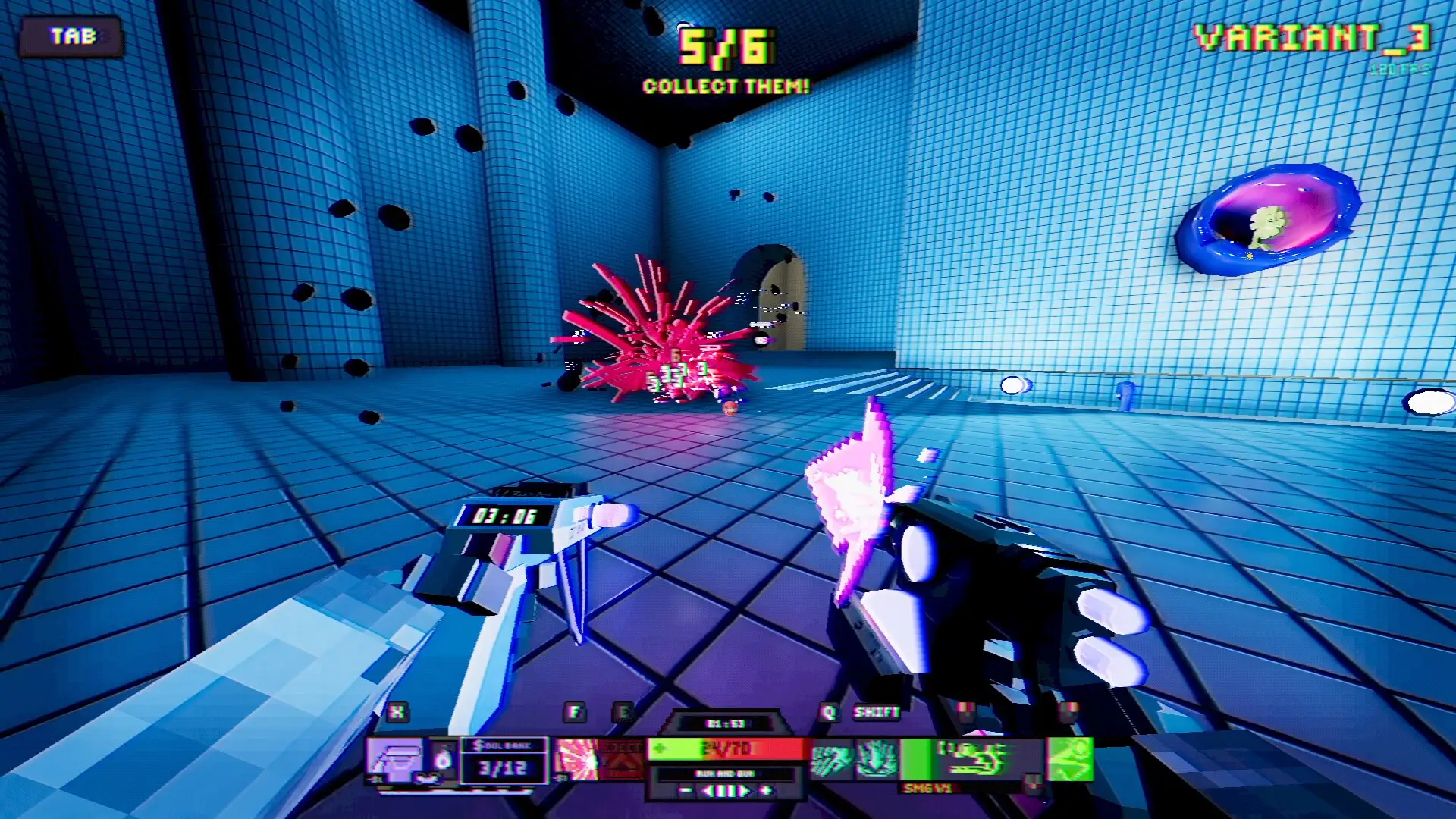
The timer is the smartest thing in the entire game.
Five minutes sounds restrictive on paper, especially in a roguelike shooter where players usually expect long-form buildcraft sessions. Instead, the countdown becomes the mechanic that ties everything together. Souls collected from enemies can extend the timer, heal the player, or be invested into upgrades during runs. Suddenly every firefight becomes an economic decision.
Do you clear safely and slowly?
Do you rush aggressively for better soul efficiency?
Do you spend resources surviving now or extending the run later?
That constant tension creates an unusually sharp gameplay loop. It prevents the dead-air pacing that drags down a lot of roguelites once players stabilize. There’s very little downtime here. Even shop moments feel tense because the clock pressure never fully leaves the player’s head.
The genius part is that the game rarely feels unfair about it.
ODDCORE understands readability better than most indie shooters built around overwhelming numbers. Enemy attacks are generally readable enough to support high-speed movement decisions. Arena layouts are chaotic without becoming incomprehensible noise. Even during the more absurd visual moments, there’s usually enough gameplay clarity to maintain control.
Usually.
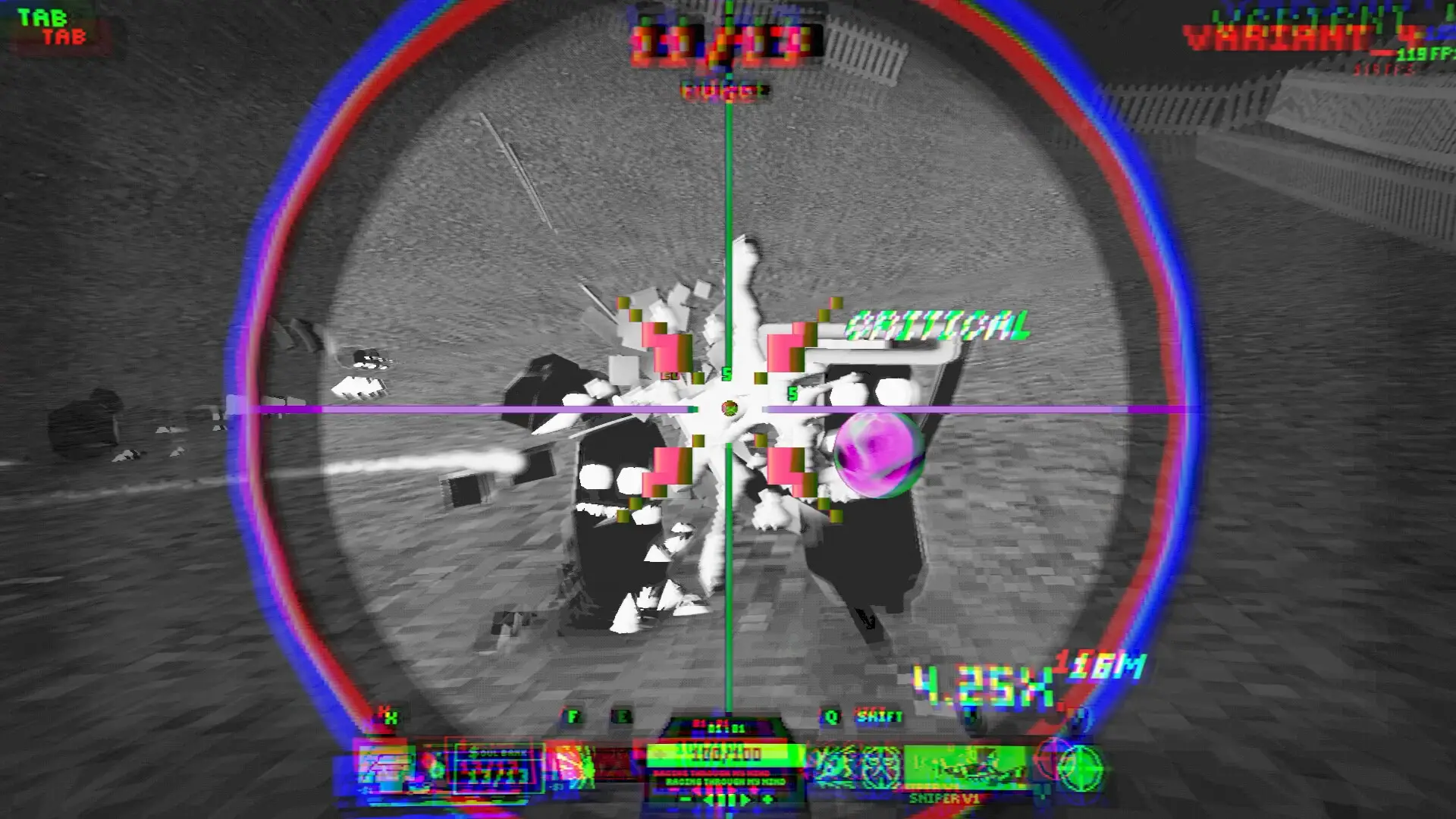
The game absolutely crosses into visual overload at times, especially once enemy density spikes and projectile clutter starts stacking with environmental distortion effects. Some runs can feel like navigating a corrupted PS1 screensaver while a dozen screaming geometry creatures throw neon garbage at your face. Players sensitive to visual chaos may bounce off hard.
But for players wired for aggressive movement shooters, that sensory overload becomes part of the adrenaline loop.
Gunplay That Actually Feels Alive
A lot of retro-inspired shooters understand movement but fail the shooting itself. Weapons look cool, sound loud, and technically function, yet lack real tactile satisfaction.
ODDCORE mostly avoids that trap.
The guns carry enough punch to maintain momentum. Hit feedback is chunky without becoming cartoonishly exaggerated. Enemy reactions communicate impact properly. Reload cadence, firing rhythm, movement speed, and target density all sync together in a way that creates flow instead of friction.
More importantly, the game understands how movement and shooting should feed each other.
The best runs happen when the player starts chaining traversal gadgets, aerial movement, enemy prioritization, and resource collection into one uninterrupted sequence. The combat stops feeling like isolated encounters and starts feeling like maintaining a state.
That’s where ODDCORE becomes dangerous for anyone prone to “one more run” syndrome.
Runs are short enough to feel low-commitment but mechanically dense enough to create immediate recovery attempts after failure. Death rarely feels like wasted time because the game feeds progression rewards consistently while keeping loading and downtime minimal.
This is old arcade psychology wearing modern roguelike clothing.
The Liminal Space Aesthetic Actually Matters
Most games using liminal-space aesthetics treat the environment like wallpaper. ODDCORE integrates it directly into the gameplay tone.
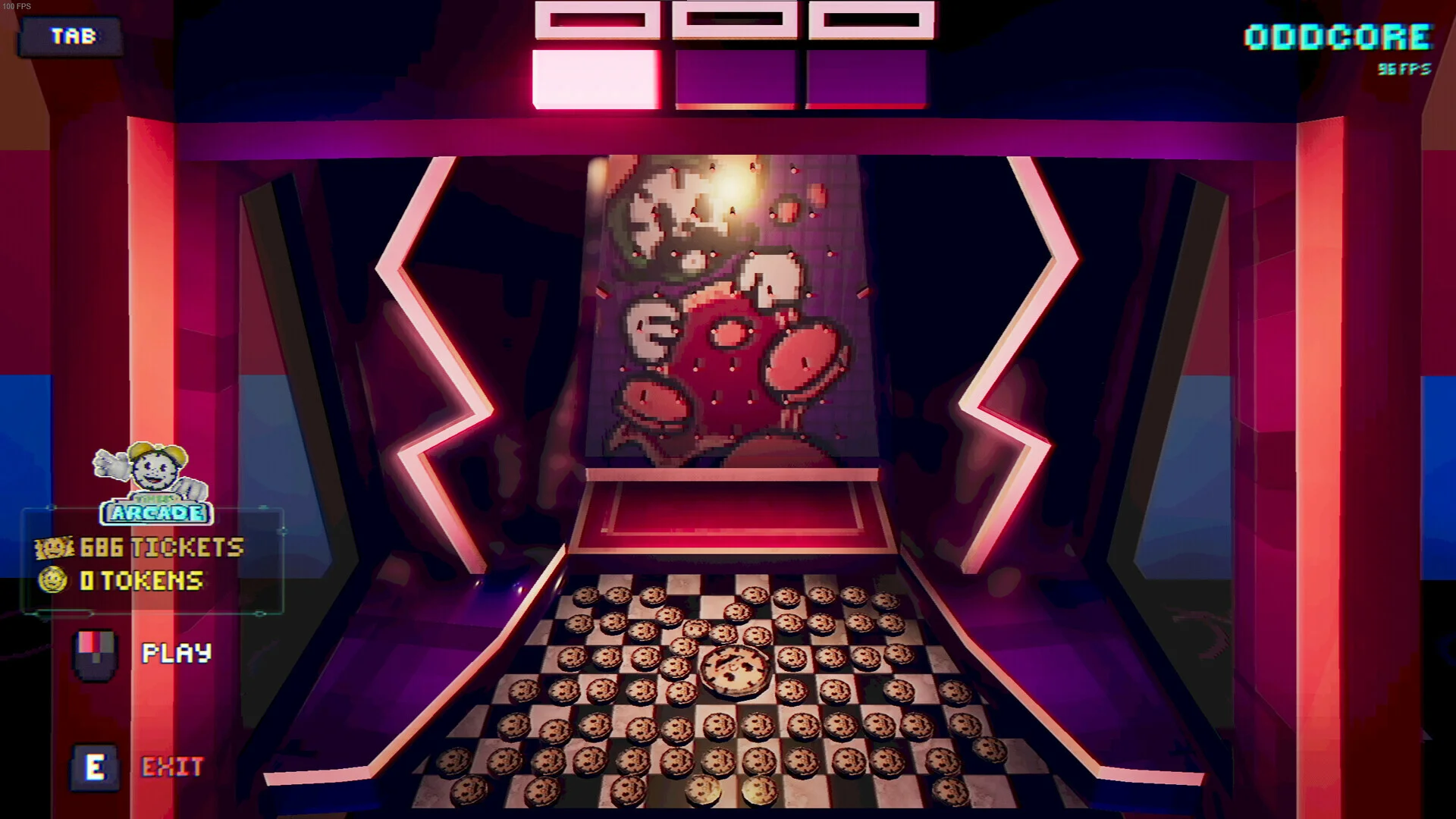
The strange mall-like hubs, endless corridors, warped public spaces, arcade structures, and dreamlike geometry create a weird emotional contrast against the intensity of the combat. The spaces feel oddly calm between firefights, almost comforting in a cursed way. Then the game throws the player back into frantic violence seconds later.
That rhythm matters more than people realize.
Without the eerie quiet atmosphere between battles, the game’s constant aggression would probably become exhausting much faster. The liminal presentation gives the pacing breathing room without actually slowing progression.
Visually, the game nails a difficult balance between retro ugliness and deliberate art direction.
This isn’t faux-retro in the clean, sanitized indie sense. ODDCORE genuinely embraces ugly textures, distorted geometry, low-resolution visual grime, and hostile environmental weirdness. Yet it still maintains enough visual cohesion to feel authored instead of random.
The VHS filter option could have easily been cringe nostalgia bait. Instead it genuinely complements the aesthetic by softening some of the harsher visual edges and reinforcing the dreamlike corruption vibe.
The atmosphere works because the game commits fully instead of winking at the player constantly.
Progression Without Bloat
One of the more refreshing parts of ODDCORE is that it doesn’t drown the player in fake complexity.
Modern roguelites often mistake quantity for depth. Endless currencies. Fifteen progression trees. Permanent unlock systems stacked on top of meta-progression layered over temporary modifiers. Half the genre feels designed by economists instead of game designers.
ODDCORE keeps progression surprisingly lean.
There are unlocks, gadgets, weapons, arcade systems, and upgrade mechanics, but they feed directly back into the gameplay loop rather than existing as retention bait. The hub structure also helps tremendously. Returning to the arcade-like central area between runs creates a psychological reset point that keeps progression feeling tangible.
The arcade itself is one of the game’s smartest design choices. Instead of sterile menu systems, unlocks become part of the world identity. It reinforces the surreal tone while making progression feel playful instead of transactional.
Not every unlock is equally interesting, though.
Some upgrades genuinely alter movement flow or survival strategies. Others feel more like passive statistical padding. The game occasionally slips into the classic roguelite problem where certain upgrades are simply more universally useful than others, reducing decision tension during optimized play.
Build variety exists, but it hasn’t fully matured yet.
That’s one of the biggest reminders that ODDCORE is still in Early Access.
Where Early Access Shows
The strongest criticism against ODDCORE isn’t polish. The game is surprisingly stable and mechanically coherent already.
The real issue is long-term content depth.
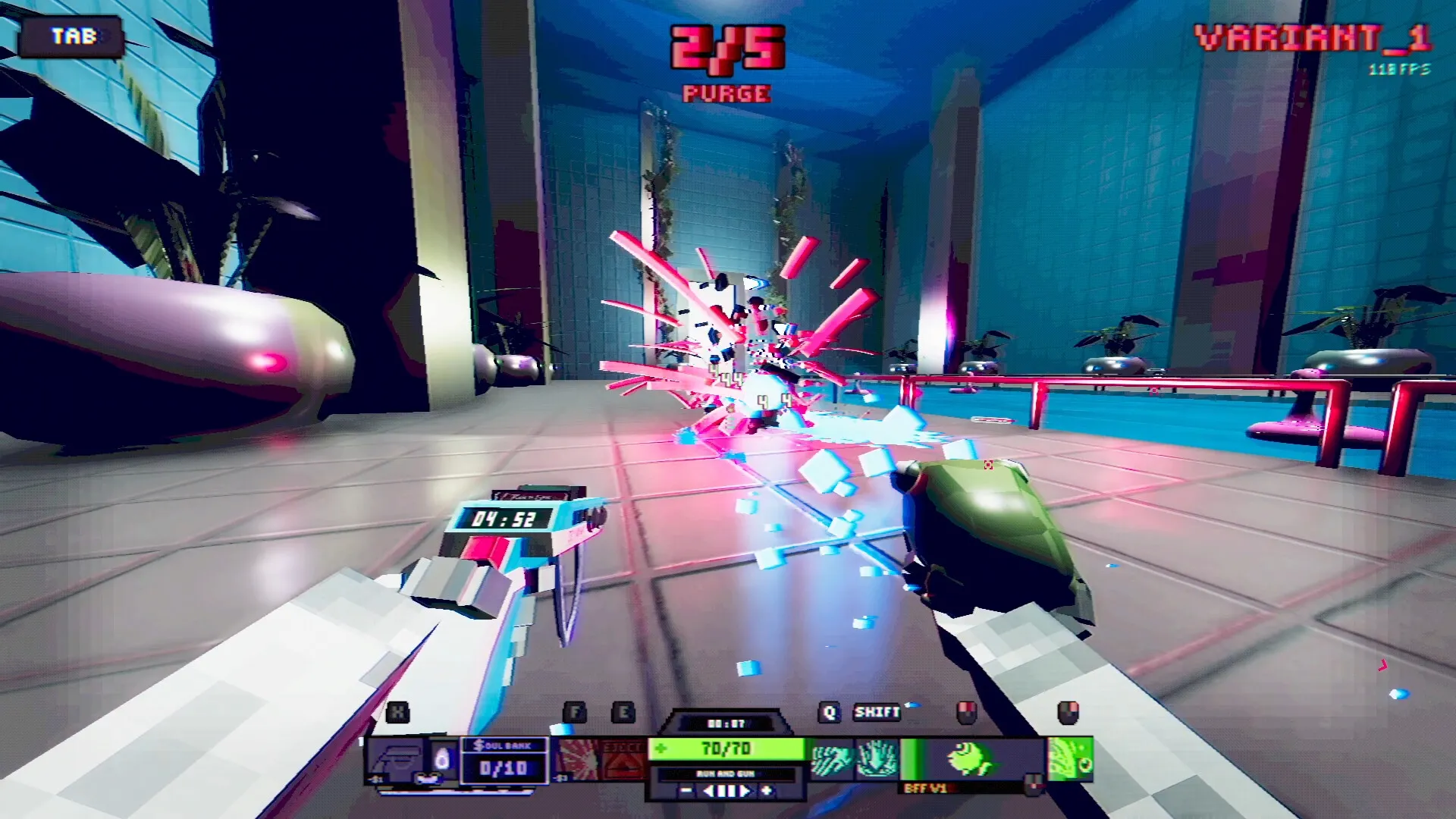
Enemy variety starts showing cracks after extended sessions. Certain enemy archetypes repeat too frequently, and some encounters eventually devolve into circle-strafing cleanup rather than evolving tactical pressure. Bosses can feel more attritional than mechanically layered, especially once players learn the safest movement patterns.
The procedural room generation also has limits.
At first, the constant environmental shifts feel wildly unpredictable. After enough runs, players begin recognizing the structural repetition underneath the randomness. The atmosphere still carries the experience surprisingly far, but the illusion weakens over time.
This becomes especially noticeable because the gameplay loop itself is so addictive. The stronger the core mechanics become, the more players start wanting deeper encounter ecosystems to sustain mastery long-term.
The game also has occasional onboarding problems.
Certain mechanics are either underexplained or explained too casually. Some players have reported discovering weapon switching or gadget systems embarrassingly late because tutorials prioritize vibe over clarity. That loose approach fits the game aesthetically, but it sometimes hurts usability.
Movement balance can also feel uneven early on. Base movement occasionally feels sluggish until players unlock stronger traversal tools, creating an awkward contrast between the game’s intended speed fantasy and the player’s initial mobility limitations.
Still, these issues feel expandable rather than foundational.
That matters a lot in Early Access.
Audio That Understands Momentum
The soundtrack deserves more credit than it’s getting.
Not because it’s constantly blasting unforgettable tracks, but because it understands pacing support. Audio distortion tied to gameplay pressure is an especially strong touch. The game manipulates sound in ways that reinforce urgency without screaming at the player constantly.
Weapon audio also lands properly. Guns sound aggressive enough to sustain combat intensity without becoming muddy noise during heavy firefights.
The ambient audio design in quieter sections does a lot of invisible work too. Humming spaces, distant environmental noise, empty-room acoustics — the soundscape sells the unsettling atmosphere without relying on cheap horror stingers every thirty seconds.
There’s restraint here.
That restraint is rare in modern indie horror-adjacent games.
A Rare Case of Style Supporting Mechanics
A lot of stylish indie shooters collapse once the aesthetic novelty wears off. ODDCORE survives because the mechanics underneath the weirdness are genuinely strong.
The game understands:
- pacing pressure
- player momentum
- readable chaos
- risk-reward loops
- aggressive flow-state design
It also understands that atmosphere works best when it supports gameplay instead of interrupting it.
The horror elements never hijack the shooter. The roguelike systems never suffocate the movement. The procedural structure never fully undermines handcrafted pacing instincts.
There’s still work to do. More enemy variety is needed. More encounter complexity would strengthen replay longevity substantially. Some progression systems need deeper strategic identity. Certain runs blur together after extended play sessions.
But the foundation is absurdly strong for a low-priced Early Access project.
ODDCORE feels like a game built by people who genuinely understand why movement shooters feel good instead of merely copying the visual language of older FPS classics.
That difference is immediately noticeable once the first real run clicks into rhythm.
Players looking for slow tactical combat, narrative-heavy structure, or relaxed progression pacing probably won’t survive the first hour emotionally. ODDCORE is built for players who enjoy pressure, tempo, improvisation, and mechanical escalation. For the right audience, it’s the kind of game that quietly consumes entire evenings through pure gameplay momentum alone.
Start the discussion at board.gamegemz.com