
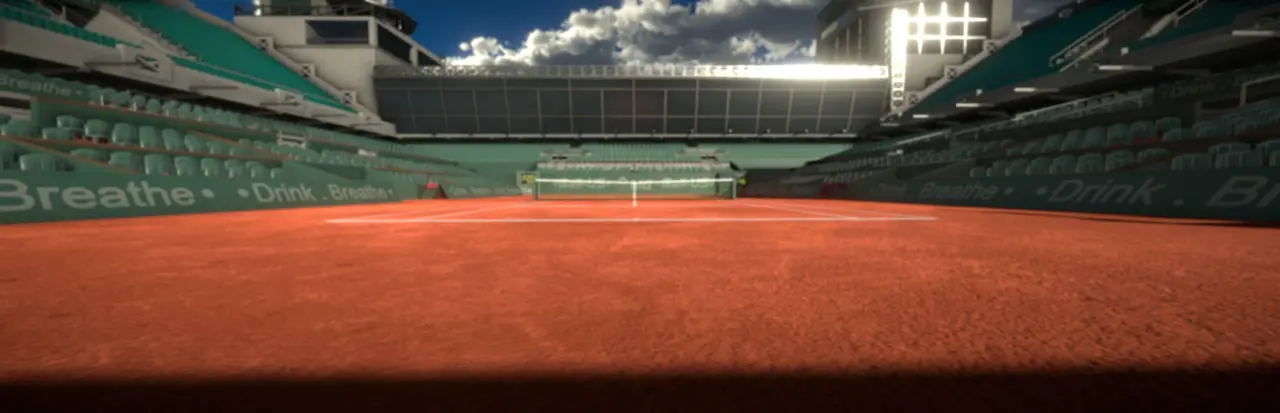
A Tennis Sim That Actually Respects Tennis
Sports games have spent the last decade sanding off complexity in the name of accessibility. Tennis especially got hit hard. Most modern tennis games chase spectacle, animation count, licensed athletes, or casual pick-up-and-play energy while quietly flattening the actual sport underneath. Rally construction disappears. Court positioning barely matters. Surface behavior feels cosmetic. You mash topspin until somebody wins.
Tennis Elbow 4 goes in the opposite direction so aggressively that it almost feels rebellious.
This is not a flashy sports product trying to sell presentation. It is a systems-heavy tennis simulation obsessed with timing, positioning, shot selection, and momentum management. It understands something most tennis games forget: tennis is not about hitting the ball back. It is about manipulating space and forcing bad responses through pressure, angle control, rhythm disruption, and risk management.
The first hour can feel rough because Tennis Elbow 4 does not fake competency for the player. Early matches are awkward. Your spacing is bad. You mistime shots. You overhit easy winners. Net play feels dangerous instead of cinematic. Serves drift long because your input discipline is sloppy. The game exposes every bad habit immediately.
Then something clicks.
You stop reacting and start constructing points.
That transition is where Tennis Elbow 4 becomes one of the most mechanically satisfying sports games on PC.
The Input Feel Carries the Entire Experience
A sports sim lives or dies by responsiveness. Tennis especially depends on tiny timing windows and directional nuance. If the controls feel floaty or over-animated, the entire illusion collapses.
Tennis Elbow 4 absolutely nails the input feel.
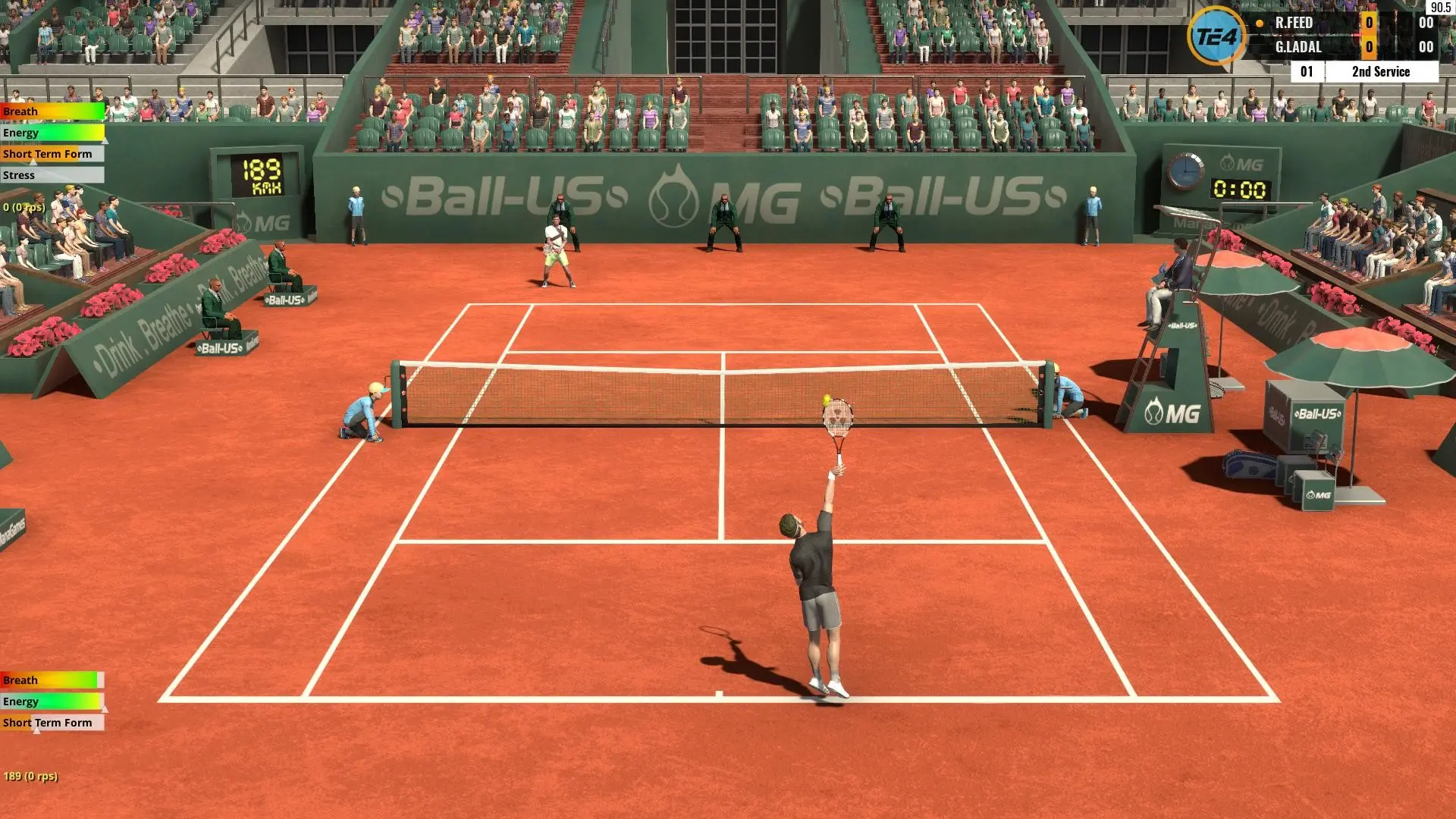
Movement is quick but readable. Players accelerate with enough snap to feel responsive without becoming arcade nonsense. Shot timing has clear feedback. You immediately understand when you contacted the ball too late, too early, too close to the body, or while off-balance. The game constantly communicates cause and effect through trajectory, ball speed, recovery timing, and court positioning instead of giant UI indicators or exaggerated visual effects.
That mechanical honesty gives rallies real tension.
Flat shots feel dangerous because they genuinely are. Defensive slices buy breathing room but can leave weak returns if used lazily. Aggressive topspin creates safer pressure but sacrifices outright pace. Drop shots are situational weapons instead of free points. Approaching the net without setting it up properly usually gets punished.
Nothing feels automated. Nothing feels heavily magnetized.
Modern sports games often hide player mistakes through animation correction systems. Tennis Elbow 4 mostly refuses to do that. If your feet are wrong, your shot quality suffers. If your timing breaks down under pressure, your rally collapses. It sounds harsh on paper, but it creates a mastery curve that keeps paying off dozens of hours later.
Winning a long rally here feels earned in a way very few sports games manage anymore.
Rally Construction Has Real Depth
The best thing Tennis Elbow 4 does is make tennis strategy emerge naturally from mechanics rather than forcing it through gimmicks.
You start recognizing patterns mid-match. Opponents expose tendencies. Some struggle against heavy topspin to the backhand. Others collapse under repeated deep shots that pin them behind the baseline. Some aggressively attack short balls and force you into riskier defensive play.
The AI is not revolutionary in a machine-learning sense, but it understands tennis structure surprisingly well. Opponents reposition intelligently, punish weak returns, and adjust rally pace depending on their playstyle. Higher difficulty matches stop feeling like stat inflation and start feeling like tactical endurance tests.
Court geometry matters constantly.
Opening the court with angled forehands before attacking the opposite corner feels incredibly satisfying because the game properly rewards positioning advantages. You can build entire matches around consistency, counterpunching, serve dominance, baseline aggression, or net pressure depending on your player build and skill level.
The game also understands one of tennis’ most important psychological elements: momentum pressure.
Long deuce games become exhausting because every mistake suddenly feels heavier. Service games under pressure create real nerves. Tie-breaks become sweaty in the best way possible because the game’s systems naturally amplify tension without scripted drama.
There are moments where you genuinely feel trapped in defensive patterns against stronger opponents, desperately trying to reset rally control. Few sports games recreate that emotional side of competition this well.
Career Mode Understands Progression Better Than Most AAA Sports Games
Career progression in Tennis Elbow 4 is surprisingly addictive despite minimal presentation.
You are not getting cinematic cutscenes, voice acting, fake social media feeds, or corporate-brand career fluff. The progression works because it focuses on the actual sport and the player’s development inside it.
Your created player improves gradually through match performance and tournament participation. Early tournaments feel scrappy and low-level. Climbing rankings takes time. Stronger opponents expose weaknesses immediately. Stamina management matters. Scheduling matters. Surface specialization matters.
The sense of improvement feels organic because your personal skill as a player evolves alongside the character stats.
That combination is powerful.
Many sports games create fake progression through number inflation while the actual gameplay remains shallow. Tennis Elbow 4 avoids that trap because mechanical mastery remains the primary progression driver. Even with upgraded stats, sloppy play still loses matches.
The modding community also massively extends longevity here. Real player rosters, visual upgrades, updated tours, custom courts, and gameplay tweaks give the game an absurd amount of staying power if you fall into the rabbit hole. This has quietly become one of the biggest strengths of the entire Tennis Elbow ecosystem.
The presentation layer may look modest compared to major sports franchises, but the simulation depth underneath gives the game far more long-term engagement than many prettier competitors.
Animations Look Weird Until Your Brain Adapts
This is where some players bounce off hard.
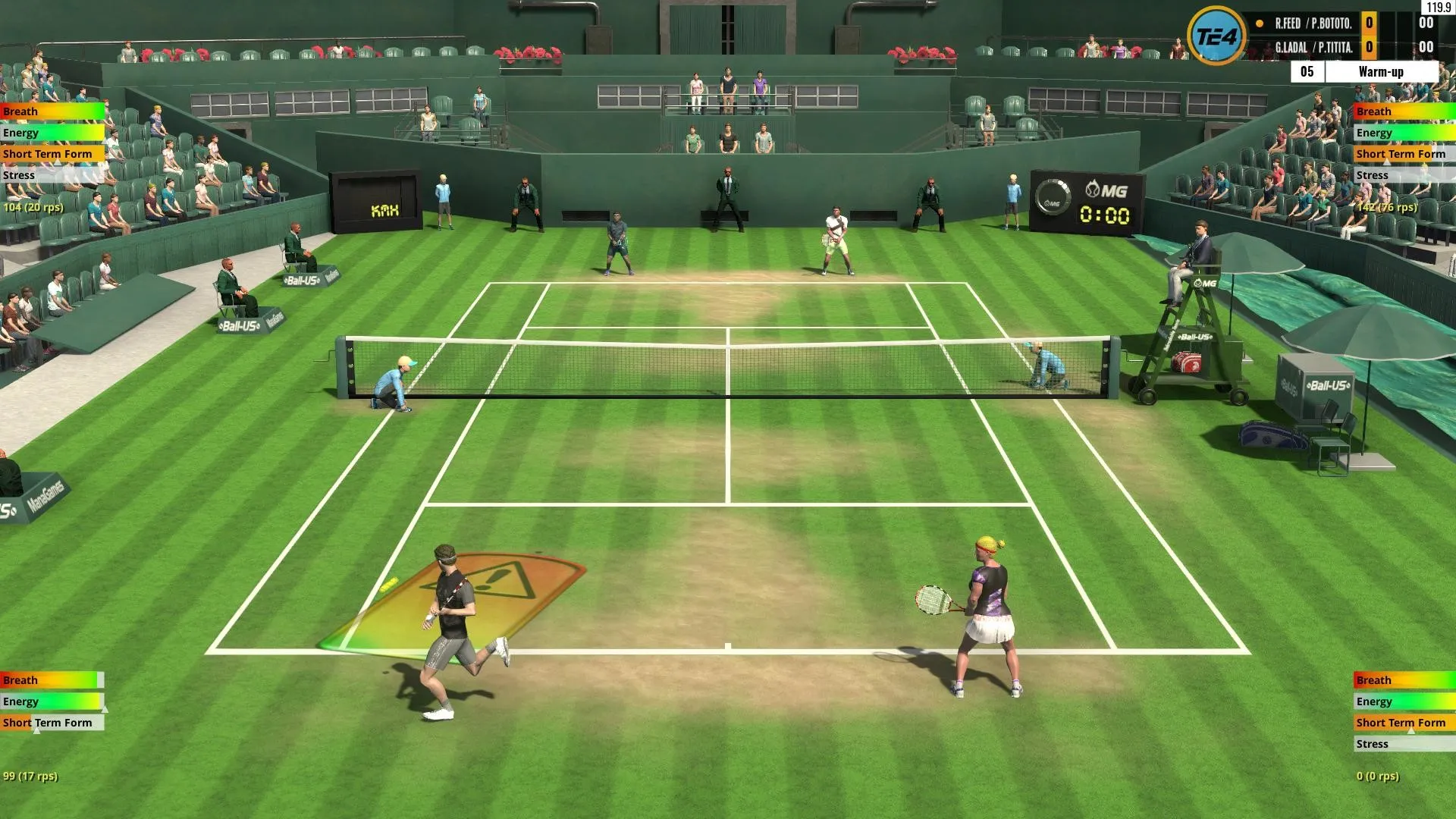
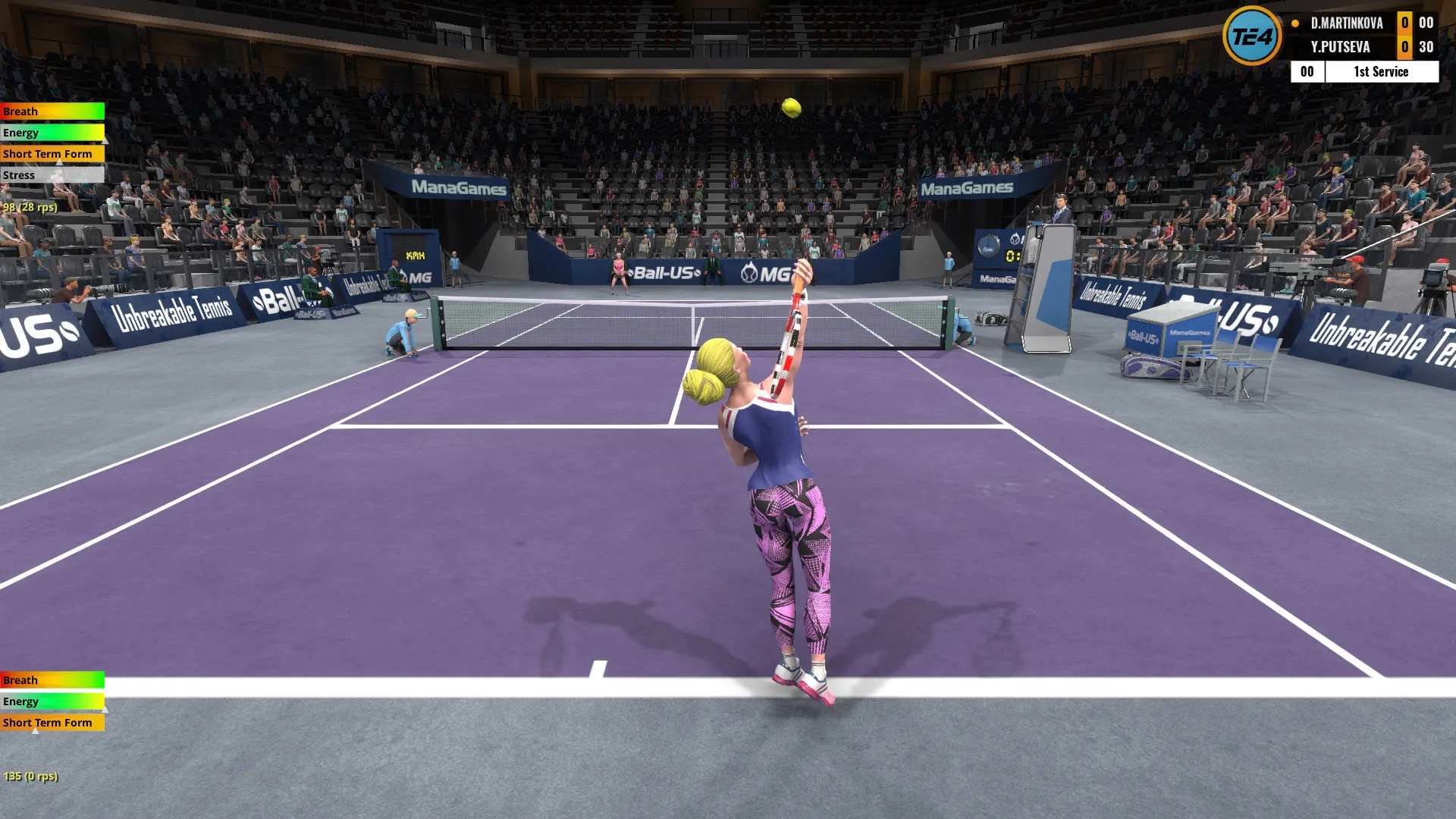
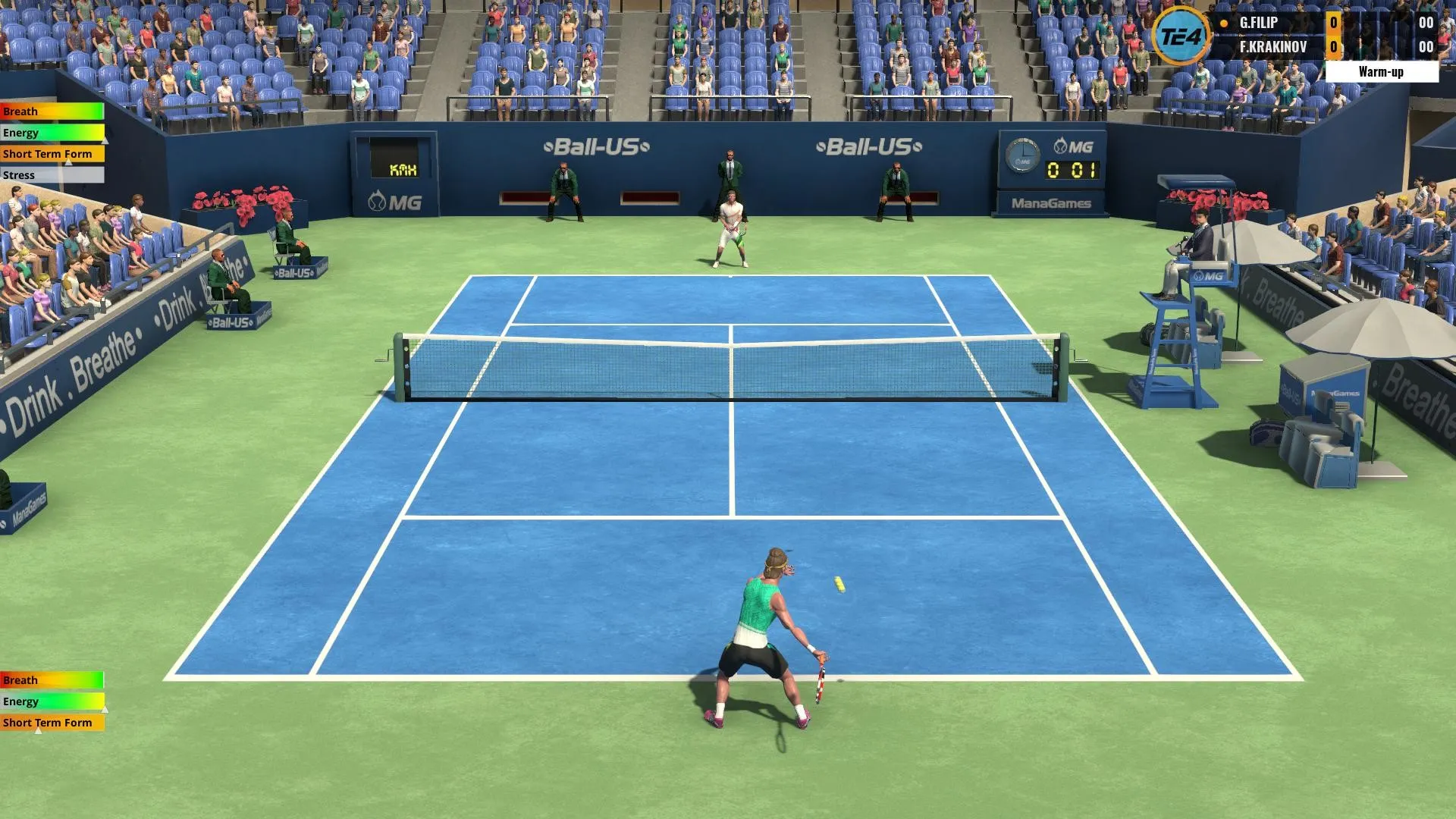
Tennis Elbow 4 is not a visual showcase. Character models are functional at best. Facial animation barely matters because there barely is any. Some movement animations can initially appear stiff or unusual compared to heavily motion-captured AAA sports games.
The thing is: animation readability matters more than raw realism in competitive sports design.
Tennis Elbow 4 prioritizes responsiveness and shot clarity over cinematic transitions. Once your brain adapts to the visual language, the matches start looking surprisingly authentic because player behavior aligns correctly with tennis logic.
You stop focusing on polygon counts and start reading body positioning, recovery direction, and shot setup.
There is still undeniable jank in places. Crowd presentation is basic. Menus feel old-school. Broadcast-style immersion is limited. Replay presentation lacks polish. Audio commentary barely exists as a feature.
None of that ruins the experience because the core gameplay loop is so mechanically strong, but players expecting glossy production values will absolutely feel the budget limitations.
This is a simulation-first sports game made by people who clearly care more about tennis systems than spectacle.
Depending on the player, that is either the entire appeal or the biggest barrier.
Surface Behavior Actually Matters
A shocking number of tennis games fail this completely.
Tennis Elbow 4 handles court surfaces with meaningful gameplay differences instead of tiny cosmetic modifiers. Clay slows rallies down and rewards patience. Grass speeds exchanges up and lowers reaction windows. Hard courts sit between both extremes with more balanced pacing.
These differences reshape match flow.
Serve-and-volley tactics become more viable on faster courts. Defensive baseline play gains value on clay. Shot selection changes naturally depending on bounce behavior and rally speed.
The game trusts players to notice these differences through gameplay instead of constantly announcing them through UI overlays or exaggerated arcade mechanics.
That restraint gives the simulation far more credibility.
Difficulty Scaling Feels Legitimate
One of the biggest failures in sports games is fake difficulty.
Either the AI starts cheating through stat boosts, or input delay and rubberbanding create artificial challenge. Tennis Elbow 4 mostly avoids this nonsense. Higher difficulties sharpen opponent consistency, tactical intelligence, and execution quality rather than turning them into superhuman script monsters.
You lose because your positioning breaks down under pressure. You lose because your shot selection becomes predictable. You lose because your stamina management collapses in long rallies.
That distinction matters enormously.
The game respects player intelligence enough to let losses feel educational rather than rigged.
There are still occasional AI quirks. Some rallies can become overly safe at certain settings. Certain playstyles feel slightly more dominant depending on configuration and player skill level. But compared to the state of most modern sports AI, Tennis Elbow 4 performs remarkably well.
Audio and Atmosphere Stay Functional Rather Than Memorable
Audio is probably the game’s weakest area if judged against top-tier sports production.
Crowd atmosphere exists but rarely becomes immersive. Commentary absence may bother players accustomed to TV-style presentation. Menus sound minimal. Music is forgettable.
The actual on-court audio does its job though. Ball impact sounds are sharp enough to support timing feedback. Footwork sounds help positioning awareness. Fast rallies create decent kinetic energy through sound design alone.
The atmosphere emerges more from competitive tension than audiovisual spectacle.
Again, this comes back to priorities.
Tennis Elbow 4 spends its resources on gameplay systems instead of broadcast presentation. Some players will deeply appreciate that focus. Others will see it as low-budget austerity.
The Skill Ceiling Is the Entire Point
This is not a tennis game built around instant gratification.
The skill ceiling is massive. Timing precision matters constantly. Advanced shot control takes practice. Reading opponent positioning becomes increasingly important at higher levels. Match pacing changes dramatically depending on player style and surface type.
There is always another layer to improve.
You can spend dozens of hours refining serve placement alone. Net approaches become a mind game. Defensive scrambling evolves into strategic recovery positioning instead of blind survival.
That long-term mastery curve gives Tennis Elbow 4 an old-school PC sports sim energy that barely exists anymore. It respects the idea that players can enjoy learning difficult systems without constant dopamine fireworks every thirty seconds.
The game trusts mechanics to create engagement.
That trust pays off.
Why Tennis Elbow 4 Deserves Attention
Tennis Elbow 4 will never dominate mainstream sports gaming conversations because it refuses to chase the things mainstream audiences usually prioritize. It is not obsessed with licensing spectacle, cinematic presentation, celebrity marketing, or casual onboarding.
It is obsessed with tennis.
Real tennis. Tactical tennis. Stressful tennis. Precise tennis.
Players willing to push through the rough presentation and early learning curve will find one of the deepest sports simulations currently available on PC. The mechanical foundation is exceptional. The rally dynamics feel authentic. The career progression stays engaging because player skill genuinely matters. The AI understands the sport better than most competitors in the genre.
People looking for a flashy arcade tennis game should stay far away.
People who want a tennis game that actually understands why tennis is compelling in the first place should pay attention immediately.