

A Survivor-Like That Understands Momentum
The survivor-like genre has a serious fatigue problem. Too many games chase the dopamine loop without understanding why the formula worked in the first place. They pile on upgrades, particle effects, and fake progression systems while the actual moment-to-moment play feels half-asleep. You move in circles, watch cooldowns fire automatically, and mentally check out after ten minutes.
Vital Shell avoids that trap almost immediately.
This thing understands movement. It understands pressure. It understands the difference between passive power fantasy and active engagement. That distinction matters more than any retro aesthetic or feature list because it changes how the entire game feels in the hands.
On paper, the pitch sounds dangerously close to genre sludge: PS1-style mech survivor roguelite with fantasy archetype robots, wave combat, builds, unlocks, and synergies. A sentence like that usually translates into “another cheap Steam game that survives on nostalgia and one decent mechanic.” Instead, Vital Shell plays with a surprising amount of mechanical intent.
The biggest reason is simple: it refuses to become background noise.
Combat That Demands Participation
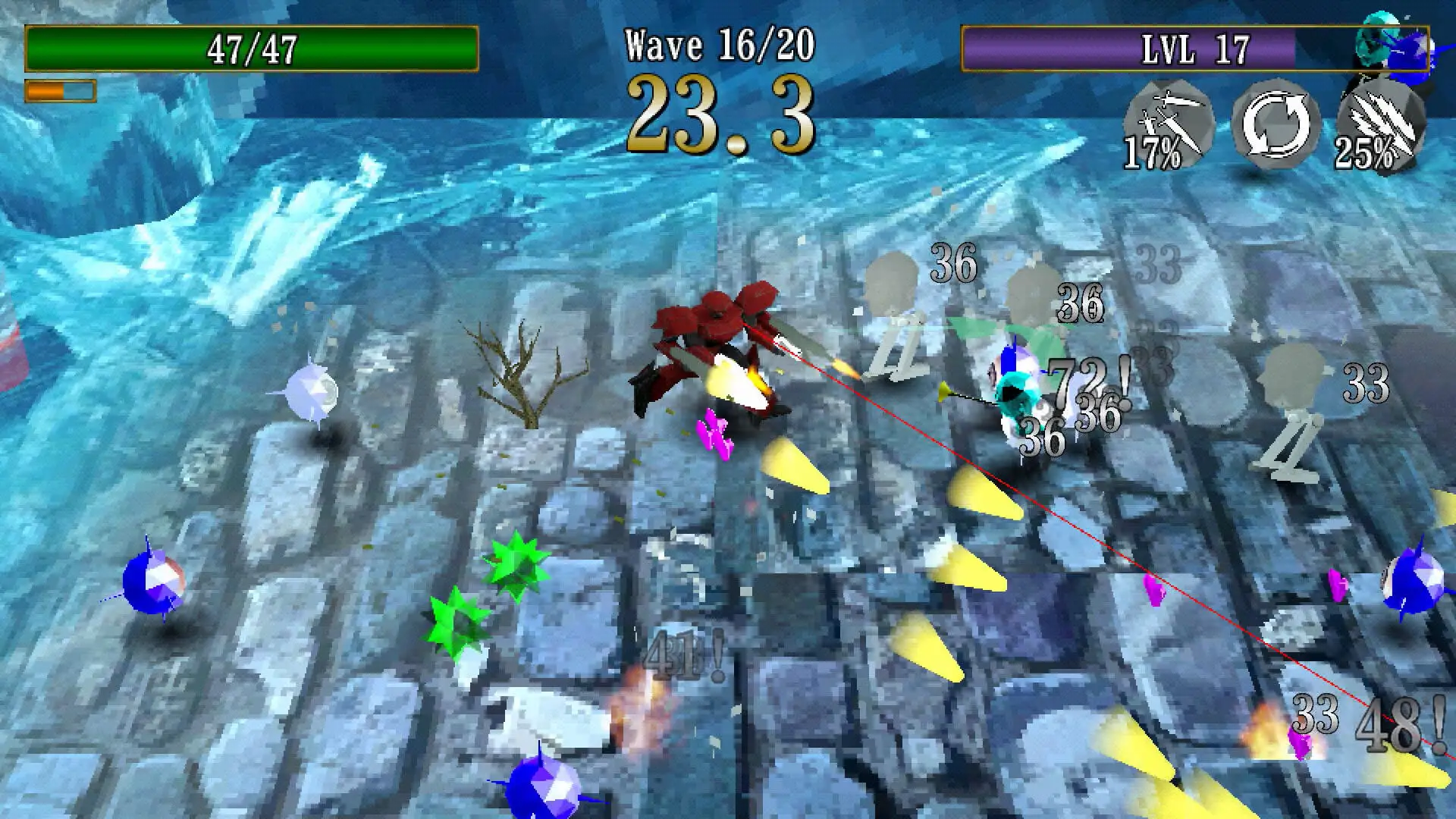
A lot of survivor-likes eventually devolve into optimization screens interrupted by movement. Vital Shell keeps the player mentally engaged far longer because positioning actually matters. Enemy density ramps aggressively, projectile patterns become dangerous early, and melee spacing creates constant risk-reward decisions.
The sword-focused starter shell is a perfect example. It would have been easy to make melee builds feel gimmicky or weak compared to ranged spam setups, but the game gives melee attacks proper impact and commitment. Hits feel weighty without becoming sluggish. There’s a slight arcade sharpness to the input feel that recalls late PS1 and Dreamcast action games where responsiveness mattered more than animation realism.
Enemy readability stays surprisingly clean even when the screen gets chaotic. That matters in a genre where visual clutter routinely destroys decision-making. Vital Shell throws a lot at the player, but attacks usually remain identifiable enough that deaths feel connected to positioning mistakes rather than unreadable nonsense.
That alone puts it ahead of a depressing number of modern indie action games.
The combat loop constantly pushes players into micro-decisions:
Do you greed for crystals during a dangerous projectile spread?
Do you commit to a close-range build knowing later waves become bullet hell nightmares?
Do you build around movement speed and survivability or lean into absurd damage scaling before the run collapses?
Those decisions create tension throughout runs instead of turning the game into passive stat inflation.
There’s also a subtle aggression to enemy behavior that keeps momentum alive. Enemies don’t merely drift toward the player like sleepy zombies waiting to be farmed. Swarms pressure angles. Projectile units force repositioning. Elite threats disrupt comfort zones. The game rarely allows fully brain-off autopilot unless the build has genuinely earned it.
That distinction is important. Broken builds feel rewarding because the early and midgame still demand attention.
The Buildcraft Carries The Replayability
Vital Shell’s progression system succeeds because it understands restraint.
A lot of indie roguelites make the mistake of drowning the player in endless currencies, talent trees, meta systems, crafting layers, seasonal nonsense, and pseudo-RPG complexity that bloats the pacing. Vital Shell stays lean. Runs are fast. Unlocks matter. Synergies are understandable without becoming shallow.
The gem socketing system is where the game really starts finding its identity.
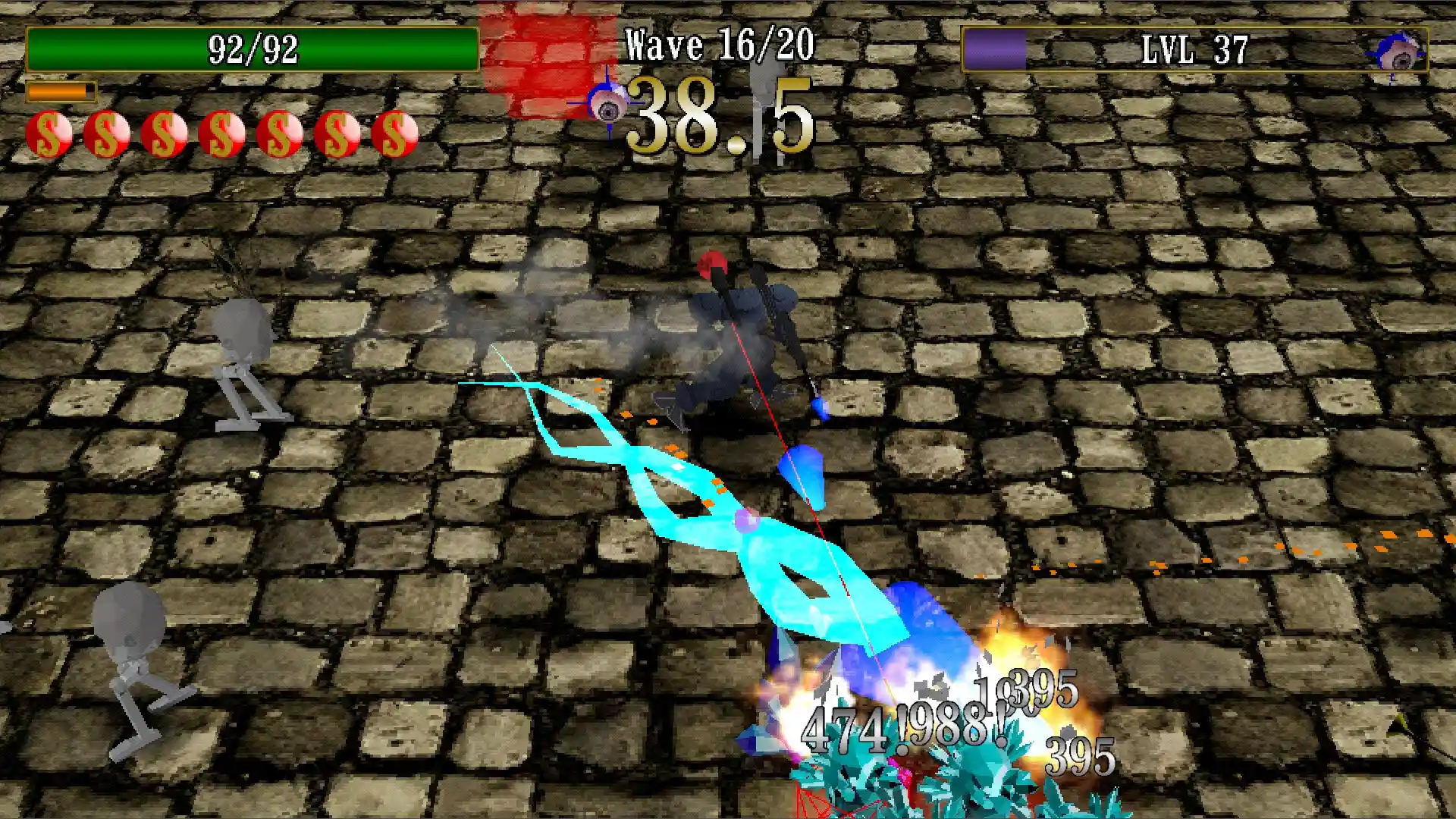
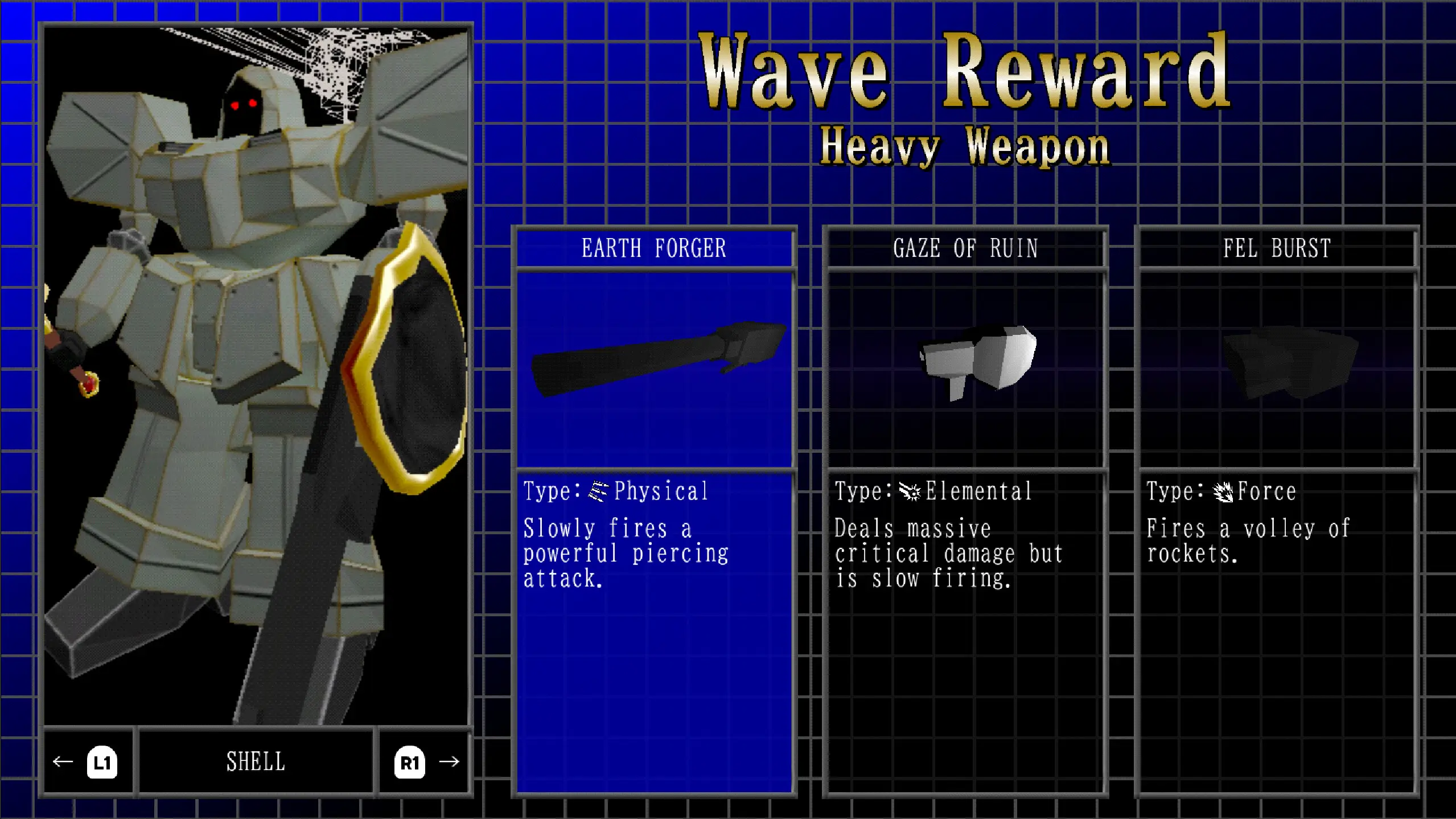
Weapons can be modified with gems that alter functionality and scaling behavior, leading to builds that evolve into absolute screen-clearing chaos if the player understands how mechanics interact. Some combinations push projectile spread into absurd territory. Others lean into attack frequency, status effects, mobility scaling, or close-range burst damage.
The important part is that builds feel authored by the player rather than randomly assembled from disconnected upgrades.
There’s enough friction in the system to create experimentation. You’re not instantly handed perfect synergy every run. Sometimes the game gives awkward upgrade paths and forces adaptation. Good roguelites live and die on that improvisational tension. Vital Shell gets it.
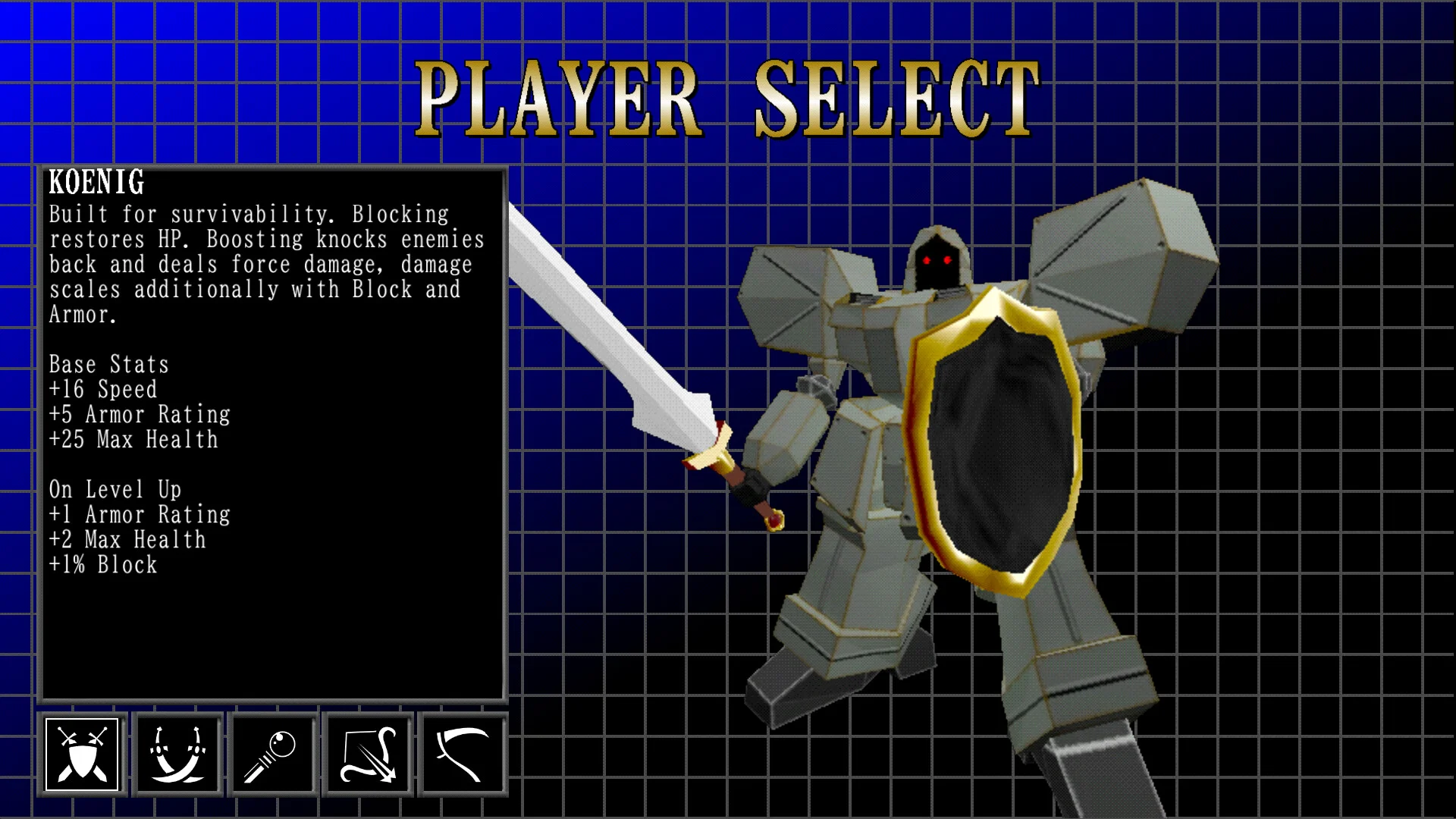
The five mech archetypes also do more than merely alter starting stats. Their playstyles meaningfully shift pacing and risk tolerance. Some shells reward aggressive routing and constant engagement. Others encourage more deliberate spacing and projectile control.
Could the roster be larger? Sure. Five shells is not massive content density. But the game squeezes enough variation out of them that repetition takes longer to set in than expected.
The mastery curve is stronger than it initially appears too. Early runs can trick players into assuming the game is mechanically light. A few hours later, routing decisions, cooldown timing, enemy prioritization, and synergy planning start revealing real depth underneath the arcade simplicity.
That’s usually a sign the systems are healthy.
The PS1 Presentation Could Have Been A Gimmick
Retro visuals are cheap currency right now. Slap on low-poly geometry, jittery textures, and crunchy filters and suddenly every Steam page starts talking about “PSX-inspired atmosphere.”
Most games using that aesthetic barely understand why old hardware limitations created memorable visuals in the first place.
Vital Shell actually gets surprisingly close.
The low-resolution presentation works because it commits to cohesion instead of nostalgia bait. Enemy silhouettes remain readable. Environmental colors help projectile clarity. Effects are stylized without overwhelming the action. Menus resemble late-90s mech games without becoming obnoxious parody.
There’s a strong old-school Japanese PC-action energy to the presentation. Not just visually, but tonally. The game feels like something discovered on a burned demo disc in 2001 from a developer nobody had heard of yet. That specific vibe is hard to fake because it relies on sincerity rather than ironic retro worship.
The environments deserve credit too. They’re minimalistic, but deliberately so. Dreamlike ruins, desolate arenas, ambient wastelands — the game avoids overdesigned scenery that would interfere with combat readability. The atmosphere lands because the art direction understands its functional role.
Audio helps enormously.
The soundtrack has that hypnotic late-night PS1 electronic mood that quietly carries long sessions without exhausting the ears. It avoids the common indie mistake of trying too hard to sound “epic.” Instead, the music settles into rhythmic momentum that complements the gameplay loop.
Sound effects are punchy in the right places too. Hits have enough crunch. Weapon discharges carry texture. Explosions don’t sound weak or placeholder. Small details like that massively affect perceived combat quality.
Good action games live through audiovisual feedback as much as mechanics.
Vital Shell clearly understands this.
Where The Cracks Start Showing
The game’s biggest weakness is content longevity.
Five stages and relatively short runs keep pacing tight, but they also expose repetition faster than deeper roguelites. Once players start understanding optimal build routes and enemy patterns, some of the surprise factor fades quicker than desired.
That doesn’t kill the replayability because the core gameplay remains strong, but it does limit long-term obsession potential.
The enemy variety could also expand further. The game introduces enough threat types to support its mechanics, but later runs occasionally recycle familiar encounter rhythms a bit too heavily. A few additional enemy behaviors or mid-run event variations would dramatically improve late-session freshness.
There’s also an occasional balance wobble between builds. Some synergies spiral into absurd dominance while others feel noticeably undercooked by comparison. Normally that’s expected in roguelites, but Vital Shell sometimes crosses the line where weaker paths stop feeling experimental and start feeling mathematically doomed.
Thankfully, the game’s short run structure softens the frustration. Failed experiments don’t waste an hour of the player’s life.
The visual style, while excellent for atmosphere, may also genuinely bounce some players off. This is not clean modern readability. It intentionally embraces crunchy low-poly presentation and texture warping. People who treat retro aesthetics as novelty rather than artistic direction may struggle with it after extended sessions.
Still, the game never feels visually cheap. There’s a difference between low-budget and intentionally stylized. Vital Shell lands firmly in the second category.
The Game Understands Arcade Discipline
One thing that stands out after several hours is how disciplined the game feels.
Modern indie design often suffers from insecurity. Developers throw systems at players because they’re terrified of simplicity. Vital Shell shows more confidence than that. It trims excess instead of inflating itself into fake importance.
Runs are around twenty minutes. Menus are efficient. Unlock pacing stays brisk. Restarting after death feels frictionless. The game respects momentum both inside and outside combat.
That arcade philosophy gives it a strange freshness despite the familiar genre framework.
It also helps that the game avoids live-service brain rot entirely. No manipulative engagement treadmill. No bloated battle-pass psychology disguised as progression. No endless retention hooks engineered by marketing departments pretending to be designers.
You boot it up because the combat loop feels good.
That sounds obvious, but it’s becoming weirdly rare.
Vital Shell understands a fundamental truth older action games used to live by: if the controls, pacing, and feedback are strong enough, players will gladly repeat content. Replayability doesn’t always require infinite systems. Sometimes it just requires mechanics that feel satisfying enough to master.
The game has that quality.
There’s a very specific type of player this will click with immediately — the kind who misses when action games cared about responsiveness more than cinematic presentation. Players who still value enemy readability, movement precision, mechanical expression, and gameplay-first design philosophy.
Not nostalgia addicts.
People who simply miss tight game design.
Technical Performance And Polish
For a small indie project, the technical state is impressively solid.
Performance stays stable even during heavier projectile chaos. Input latency feels low. Menus respond instantly. Controller support works properly. Visual clarity mostly survives late-run insanity better than expected.
That polish matters more than flashy production value in games like this.
Tiny annoyances still exist. Some UI readability could improve. Certain upgrade descriptions occasionally lack clarity regarding exact scaling behavior. A few effects can visually overlap in ways that muddy immediate readability during especially overloaded builds.
Nothing here feels catastrophic though.
More importantly, the game rarely wastes the player’s time. That single quality elevates it above countless bloated indie releases chasing trends without understanding pacing discipline.
Why Vital Shell Deserves Attention
Vital Shell succeeds because it remembers that action games are supposed to feel alive in the hands.
The retro presentation grabs attention first, but the real strength is mechanical pacing. Combat stays active. Builds encourage experimentation without drowning the player in systems. Movement remains satisfying deep into repeated runs. The game understands pressure, momentum, and audiovisual feedback better than many projects with ten times the budget.
It does not reinvent the survivor-like genre. It doesn’t need to.
What it does is execute its ideas with clarity, confidence, and actual gameplay literacy. That alone makes it stand out in a genre crowded with half-finished dopamine dispensers pretending to be action games.
Players looking for endless content volume may eventually hit the edges of what Vital Shell offers. Players searching for a mechanically sharp arcade roguelite with strong atmosphere, responsive combat, and real replay energy will probably lose entire evenings to it without noticing the clock.


Wäre noch cool wenn die Bilder auch vergrössern wie es das schon gibt in diesem Board statt in einem normalen Link angezeigt zu werdem
Sorry, we don’t talk dead languages in the open area
But your suggestion, as far as I can decipher, makes a lot of sense. indeed that would be a cool feature. but I guess it’s more related to the board than the site and it’s probably a feature I can implement using CSS or maybe even some fancy plugin.
my bigger problem right now is that I would kinda like to implement a preview on hover for posts and ideally it would show only the first image, which once was the game capsule (the image link previews also use).
But the capsule had no real usage besides being used later in the link preview and it took a lot of space.
In the current version I replaced the image with a video embed. Now I don’t really have an image for the link preview and I don’t even know if it’s possible to use one later, which is not included in the post.
I don’t want to go for image and trailer because in that case the “show full post” button is pushed below the visible area and you have to scroll for it, which is kinda unclean. I like right now that a user can watch the trailer and read the description and if really interested read the full article. before, you just had the text and a none-descriptive image you could use to decide if you are interested in the preview article.
but I would also like to put the whole Game Review topic as a sub category inside the Gem Court. Which is kinda related and the more interesting thread for discussions. Game reviews are just an alternative way to browse the content of the main page with a bit less information and to comment on articles/games.
A site admin engaging in out-of-topic discussions, na na na